What Is a Write Blocker in Digital Forensics?
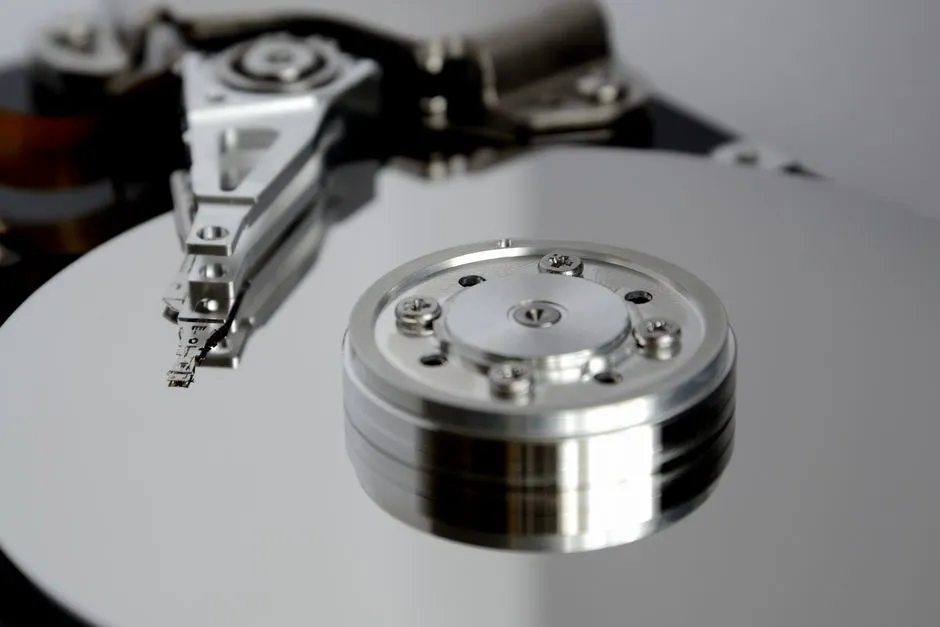
- A write blocker protects source media from writes
- Why can connecting a drive change it?
- What does a write blocker do at the interface?
- Hardware and software write blockers are different controls
- Where does the blocker sit in an acquisition workflow?
- A write blocker is not the same as a forensic image
- How should a laboratory validate a write blocker?
- What belongs in the case notes?
- What are the limitations of write blocking?
- What if a write blocker cannot be used?
- A seven-question write-blocker check
- Sources checked
A write blocker protects source media from writes
A write blocker is hardware, software, or a combination of both that lets an examiner read storage media while preventing additions, deletions, and alterations on that media. In digital forensics, it sits between the examiner's system and the source drive so routine operating-system or application activity does not silently change the evidence.
That is its precise job. A write blocker does not prove who used a device, decide what data is relevant, create a forensic image, or make an investigation lawful. It is one control inside a documented acquisition process. The examiner still needs authority, a tested method, contemporaneous notes, verification results, and an intact custody record.
This guide is defensive and educational. Only acquire or examine media you own or are specifically authorized to handle. Legal duties and admissibility rules vary by jurisdiction and proceeding; case-specific decisions belong with qualified counsel and a trained examiner.
Why can connecting a drive change it?
An ordinary computer expects connected storage to be usable, not preserved as evidence. Depending on the operating system, configuration, filesystem, interface, and application, attaching media may trigger mounting, metadata updates, indexing, repair prompts, thumbnail creation, or other activity. Even an examiner who intends only to look can therefore create a question about what changed and when.
A write blocker reduces that risk by filtering commands before they reach the protected media. NIST describes the basic strategy as placing a filter between application programs and the storage device, then permitting commands that do not change the device. The examiner can read sectors for preview or acquisition while write requests are stopped.
This distinction matters because source media and the forensic copy have different roles. The source should be preserved as far as the circumstances allow. Analysis normally proceeds on a verified working copy or forensic image, where approved tools can parse filesystems, recover artifacts, and create case output without treating the original as a work surface. The broader digital forensics process explains where acquisition fits.
What does a write blocker do at the interface?
The host computer issues input/output commands through a storage interface. A write-blocking control mediates that path. Read commands needed to retrieve data should reach the device and return the requested information. Commands that would change protected content should not be allowed to modify it.
NIST's hardware write-block testing model makes the expected behavior more exact. Its test reports assess whether a device:
- blocks commands that would change user or operating-system data on the protected drive;
- returns data requested by read operations;
- returns access-significant information without modification; and
- passes device-reported error conditions back to the host.
Those are functional expectations, not a promise that every product, firmware version, interface, or media type behaves identically. A label saying “write blocker” is not a test result. The lab must know what configuration was validated and whether that configuration matches the evidence in front of it.
Hardware and software write blockers are different controls
A hardware write blocker is a physical device placed between the source media and the examination computer. The protected drive connects to the blocker, and the blocker connects to the host. Models differ by supported interfaces, commands, bridge behavior, firmware, power arrangement, and reported device information.
A software write blocker uses an operating-system or application-level control on the examination system to filter or suppress writes. It can be useful when the medium and host configuration are supported and the laboratory has validated the complete setup. Its effectiveness depends on the software being loaded and configured before the source is exposed to an unprotected path.
Neither category should be treated as automatically superior in every case. The relevant question is narrower: has this exact blocker, version, interface, host configuration, and media type been tested for the intended acquisition? NIST publishes separate hardware and software write-block specifications and test material because implementation details matter.
Where does the blocker sit in an acquisition workflow?
A defensible workflow establishes authority and evidence identity before connecting anything. The exact procedure varies by organization, but the control points are consistent:
- Confirm scope and authority. Identify the device, the permitted collection, and any limits before examination begins.
- Record the source. Note identifiers, condition, labels, interface, capacity, packaging, custody status, and relevant date and time information.
- Select a validated path. Match the blocker, cables, adapters, power arrangement, host, acquisition tool, and destination to the source media.
- Verify the write-blocking state. Follow the laboratory's approved pre-use check rather than relying on an indicator light alone.
- Connect the source through the protected path. Do not first attach it directly “just to see whether it works.”
- Acquire to separate destination media. Choose a format and scope that answer the authorized evidence question. Our forensic image formats guide compares RAW, E01, AFF4, and logical collections.
- Record errors and verification output. Preserve logs, tool and firmware versions, hashes, unreadable areas, start and finish times, and any deviation from the plan.
- Secure the source again. Update custody records and return the original to controlled storage.
The write blocker protects one boundary in that sequence. It does not replace the sequence.
A write blocker is not the same as a forensic image
These terms are often collapsed, but they describe different functions.
| Control or artifact | What it does | What it does not establish |
|---|---|---|
| Write blocker | Prevents modification of protected media while allowing authorized reads | Completeness of the acquisition |
| Acquisition tool | Reads selected data and writes it to a destination | That the source path was write-protected |
| Forensic image or logical container | Stores acquired data and, depending on format, metadata | That the collection was authorized or error-free |
| Hash value | Supports comparison of defined byte sequences | Meaning, ownership, or legal admissibility by itself |
| Chain-of-custody record | Documents possession and transfers | Technical integrity without supporting acquisition records |
An examiner may use a functioning blocker and still produce an incomplete image because of damaged sectors, encryption, a wrong source range, a tool limitation, or an interrupted acquisition. Conversely, matching hashes for a copy do not retroactively prove that an unprotected source was never changed. Each control answers a different question.
How should a laboratory validate a write blocker?
Validation should follow a published or laboratory-approved test method, not an improvised confidence check on case evidence. NIST's Computer Forensic Tool Testing program publishes specifications, test support material, and product-specific or federated results for write-blocking functions. Those resources provide a model for defining expected behavior and recording observed results.
At a high level, a controlled test uses known non-case media, establishes its starting state, routes it through the proposed configuration, attempts defined read and write operations, and then independently checks whether protected content changed. The detailed commands, command classes, interfaces, and acceptance criteria belong in the lab's validated procedure.
Record at least the blocker make and model, serial number when applicable, firmware or software version, host and operating-system configuration, source interface and media type, adapters and cables, test procedure version, date, operator, expected results, observed results, and disposition. Retest after a material firmware, software, interface, adapter, host, or procedure change, and according to the laboratory's quality schedule.
Published testing helps, but it does not eliminate local responsibility. A NIST report applies to the identified device and tested configuration. It should not be generalized to a different firmware revision or an untested connection path without evidence.
What belongs in the case notes?
Write-blocker documentation should let another qualified examiner reconstruct the protected path without guessing. Record:
- source device identifier, interface, capacity, and condition;
- blocker type, make, model, serial number, and firmware or software version;
- adapters, docks, cables, power source, and host system used;
- pre-use check or validation reference and its result;
- acquisition tool, version, settings, scope, and destination;
- date and time with timezone for connection, acquisition, and disconnection;
- error messages, retries, resets, disconnects, or unexpected device behavior;
- verification algorithm, values, and the exact data object each value covers; and
- examiner identity plus the related custody entry.
Do not overwrite an unexpected event with a cleaner rerun. Preserve the original log, describe what happened, state what action followed, and explain the effect on the acquisition. Our chain-of-custody guide covers the separate transfer record around the evidence.
What are the limitations of write blocking?
Write blocking is powerful but bounded.
First, support is not universal. A blocker may support one SATA, USB, NVMe, removable-media, or bridge configuration but not another. An adapter can change the command path. Confirm the complete path, not just the connector shape.
Second, device behavior can complicate interpretation. Storage controllers, firmware, encryption, translation layers, damaged media, and error recovery may affect what the host can read. Preventing host writes does not guarantee that every requested sector will be returned or that a device's internal state never changes.
Third, some evidence questions require a live or device-mediated acquisition. Volatile memory, a running encrypted system, a phone, a cloud account, or a proprietary embedded device may not be accessible through a conventional disk write blocker. The examiner then chooses a different method, documents the reason, and records the changes the method may cause.
Fourth, write blocking does not cure poor custody, mistaken identity, inadequate authorization, missing logs, or unsupported conclusions. It preserves a technical boundary; it does not certify the whole case.
What if a write blocker cannot be used?
SWGDE's acquisition guidance says hardware or software write blockers should be used when possible and frames the broader principle as minimizing changes to source data as fully as circumstances allow. “When possible” is not permission to omit the control for convenience. It recognizes that some systems cannot be collected through a traditional protected-media path.
When a blocker is unavailable or unsuitable, stop and make the decision explicit before proceeding. Record why the protected path could not answer the authorized question, what alternative method was approved, what changes the method was expected to create, which logs or pre-acquisition observations were captured, and how the result was verified. Follow organizational policy and obtain case-specific legal or supervisory direction where required.
Do not experiment on the only evidence copy. If the limitation is merely an unsupported adapter, uncertain firmware, failed validation, or missing equipment, preserve the source and escalate rather than improvising.
A seven-question write-blocker check
Before acquisition, answer these seven questions in the record:
- Is the device and collection within written authority?
- Is the source media positively identified and its condition recorded?
- Does the blocker support this exact interface and media type?
- Does the tested configuration include every adapter and bridge in the path?
- Is the firmware or software version the validated one?
- Did the approved pre-use check produce the expected result?
- Can a reviewer connect the blocker record, acquisition log, verification result, and custody entry?
If one answer is unknown, resolve it before connecting the source. A write blocker is most useful when its role is narrow, its configuration is known, and its use is documented precisely.